LGR (Low-Grain Refrigerant) dehumidifiers
Pulls 130–230 pints/day even in cold or already-dry environments
LGR dehumidifiers and 5,000+ CFM air movers — drying done by science, not guesswork.
Structural drying is the process of returning every wet building material in your home — studs, subfloor, drywall, insulation, hardwood, concrete — to its dry standard moisture content. It is fundamentally different from extraction (which removes liquid water) and from 'leaving fans running' (which just moves humid air around). Done correctly, structural drying is governed by the IICRC S500 standard and uses psychrometry — the science of how temperature, humidity, and dew point interact — to remove bound moisture from materials at predictable rates. Done incorrectly, hidden moisture stays trapped in wall cavities and subfloors where it grows mold and rots framing for years before symptoms appear.
Restoration work generally follows the same sequence, based on IICRC industry standards.
Pin and pinless meters establish baseline moisture content for every affected material. We mark wet/dry boundaries and document with photos and floor plans.
IICRC S500 classifies losses by drying class (1–4) based on amount of wet material and category (1–3) based on contamination. This drives equipment count, type, and configuration.
Dehumidifier capacity (in pints/day) is calculated from cubic footage and drying class. Air movers are placed at 16-foot intervals along walls per S500. We use thermal imaging to verify coverage.
Plastic containment barriers limit the drying chamber to wet areas only — saving energy and protecting unaffected rooms. We balance air pressure to keep humid air contained.
A technician returns every 24 hours to log temperature, humidity, dew point, GPP (grains per pound), and material moisture content. Equipment is repositioned as conditions change.
We dry until each material reaches its dry standard — typically 12–16% MC for wood framing, 0.5–1% for concrete, 60% RH or lower for ambient air. Independent verification photos.
Comprehensive report with daily moisture logs, psychrometric data, equipment runtime, and before/after photos — submitted to your insurance with the final invoice.
What separates restoration from DIY isn't effort — it's equipment. Here's what we bring on every structural drying job.
Pulls 130–230 pints/day even in cold or already-dry environments
For below-50°F environments and very low GPP targets (large losses, post-flood)
5,000+ CFM units accelerate evaporation off wet surfaces
Focused airflow into wall cavities, under cabinets, and around obstacles
Verifies that drying is even — cool spots indicate continuing evaporation (still wet)
Daily readings logged for every monitored material
Continuous environmental tracking — humidity, temperature, dew point
Vacuum-based drying for sealed wood floors without removal
Structural drying costs are driven primarily by equipment count and runtime, not square footage alone. A typical 2-room Class 2 dry-down with 4 air movers and 1 LGR dehumidifier running 4 days costs $2,500–$4,500. A whole-floor Class 3 loss with 12 air movers and 3 dehumidifiers running 5 days runs $7,000–$12,000. Class 4 (deeply saturated materials like hardwood, concrete, plaster) can take 7–14 days and exceed $15,000. Free Xactimate-based estimate before any work — and we monitor daily, so you only pay for the equipment days actually needed, not a flat-rate guess.
See full pricing breakdownStructural drying is covered under standard homeowners insurance whenever the underlying water loss is covered (sudden pipe burst, appliance failure, storm damage). Insurance pays per-day equipment rental rates standardized by Xactimate, plus labor for daily monitoring. We document daily moisture logs that adjusters expect — this is where many DIY claims get reduced or denied: without daily monitoring records, the carrier won't pay for the drying days. We handle that paperwork end-to-end.
How we handle your insurance claimMost secondary water damage is preventable. Here are the mistakes we see most often — and what they cost.
A 70-pint consumer dehumidifier from a hardware store removes about 50 pints/day under real conditions — versus 200+ pints/day for a commercial LGR. You'll pay more in electricity than you'd save on rental, and dry too slowly to prevent mold.
Without plastic sheeting to contain the drying chamber, dehumidifiers fight the entire house — and humidity migrates into adjacent rooms, spreading the wet zone instead of shrinking it.
Counter-intuitive but true: in high humidity outdoor conditions, opening windows can actually slow drying. The science is grain depression — bringing in 90% RH air gives the dehumidifier more work, not less.
Surface MC drops fast; framing and subfloor MC lag by days. Stopping early means mold grows inside walls 6–12 months later when the trapped moisture finally surfaces.
Drying without daily readings is gambling. You can't manage what you don't measure — and adjusters won't pay for what wasn't documented.
Drying must begin within 24 hours of extraction to stay ahead of mold. Wet drywall loses structural integrity after 48–72 hours of saturation — meaning what could have been dried in place becomes 'tear out and replace' (10× the cost). Wood subfloor delaminates after 5–7 days wet. Mold colonization becomes visible at 24–48 hours and well-established by day 7. Daily monitoring catches drying-rate problems before they become reconstruction problems — that's why we don't 'set and forget' equipment.
Free, no-obligation inspection. We document everything, bill insurance directly, and never charge for the assessment — even if you choose not to proceed.
Drag each slider to see what a completed restoration can look like. These are AI-generated illustrations, not photos of actual customer projects.
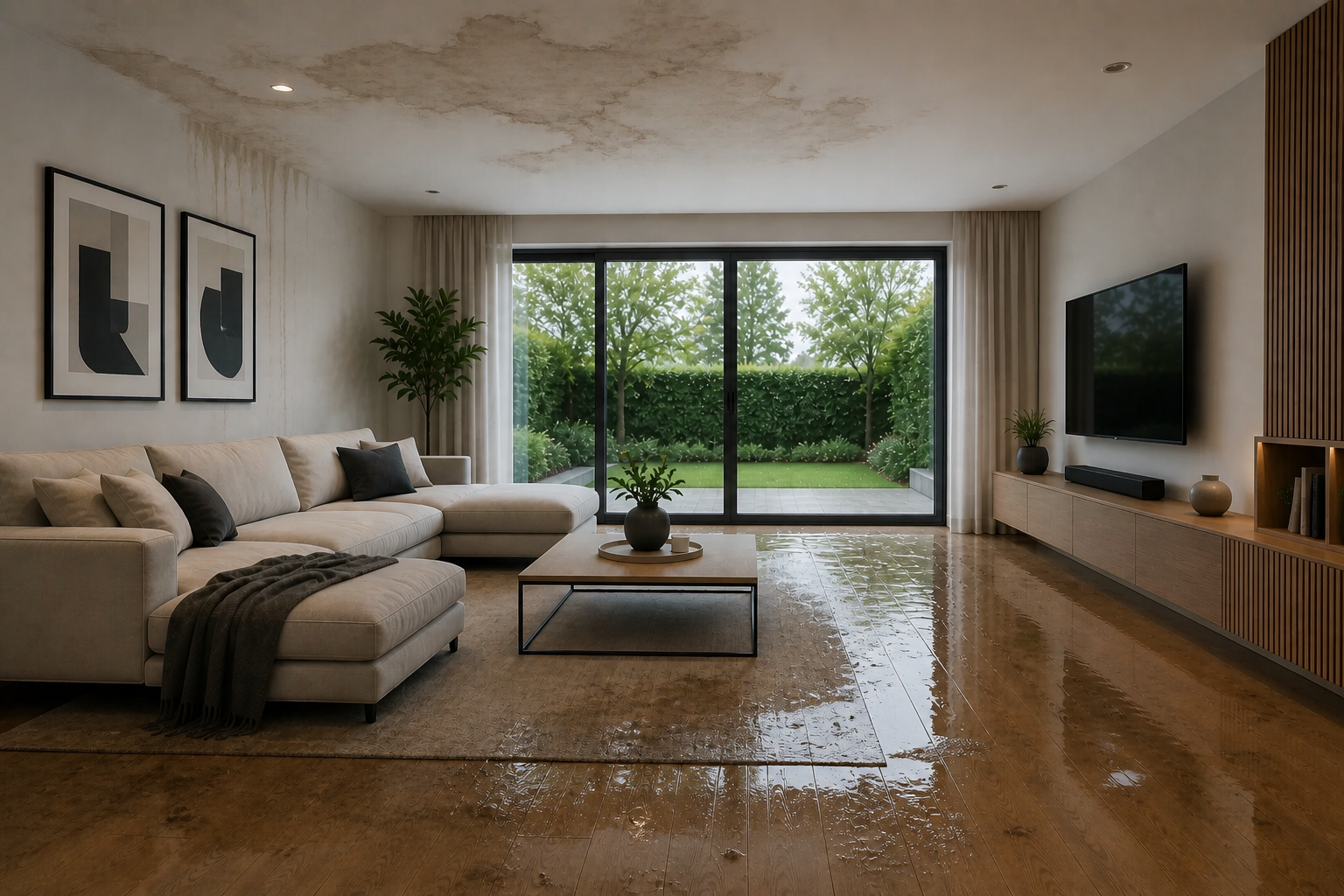
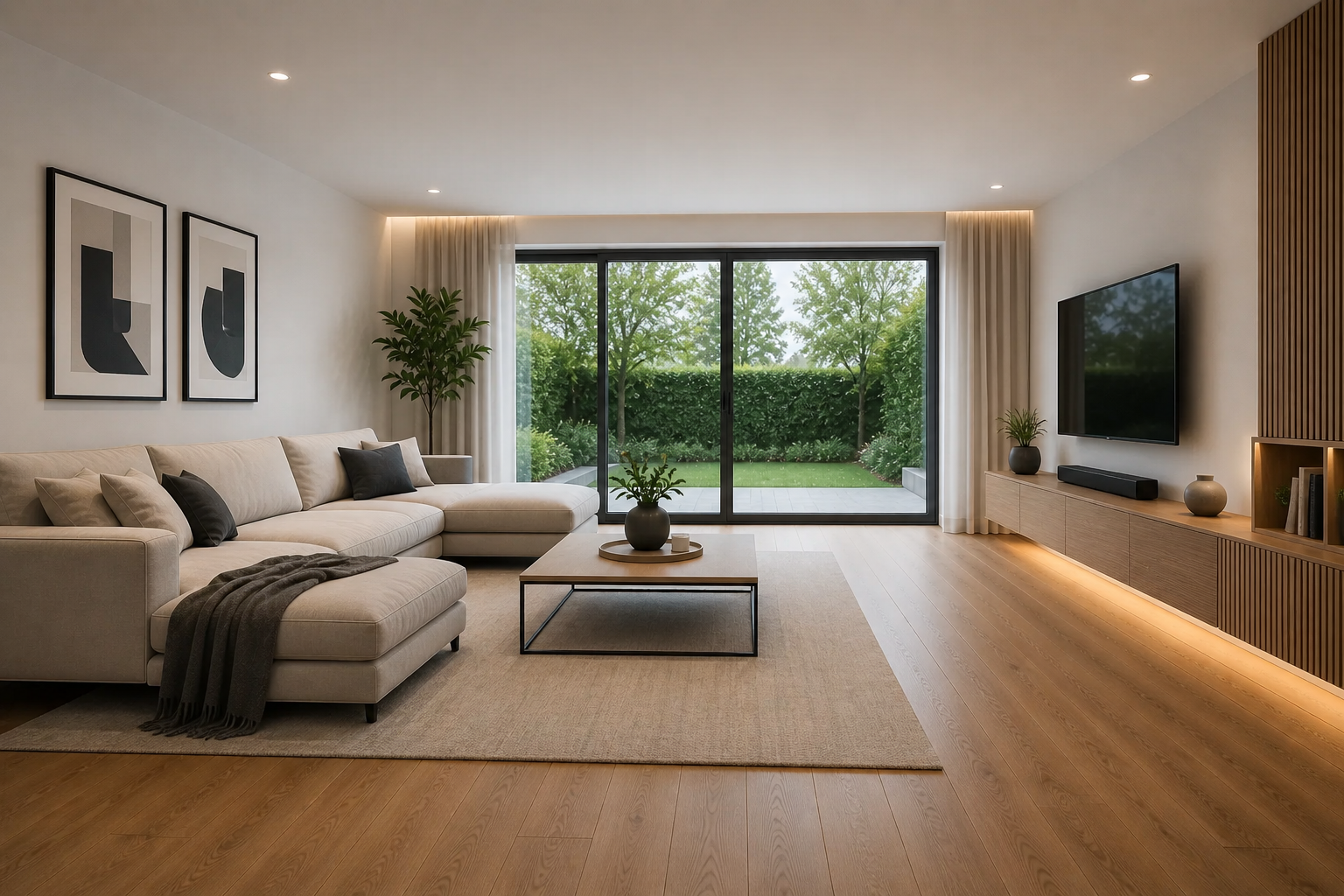
AI-generated – not an actual customer project. Shows what a result may look like.
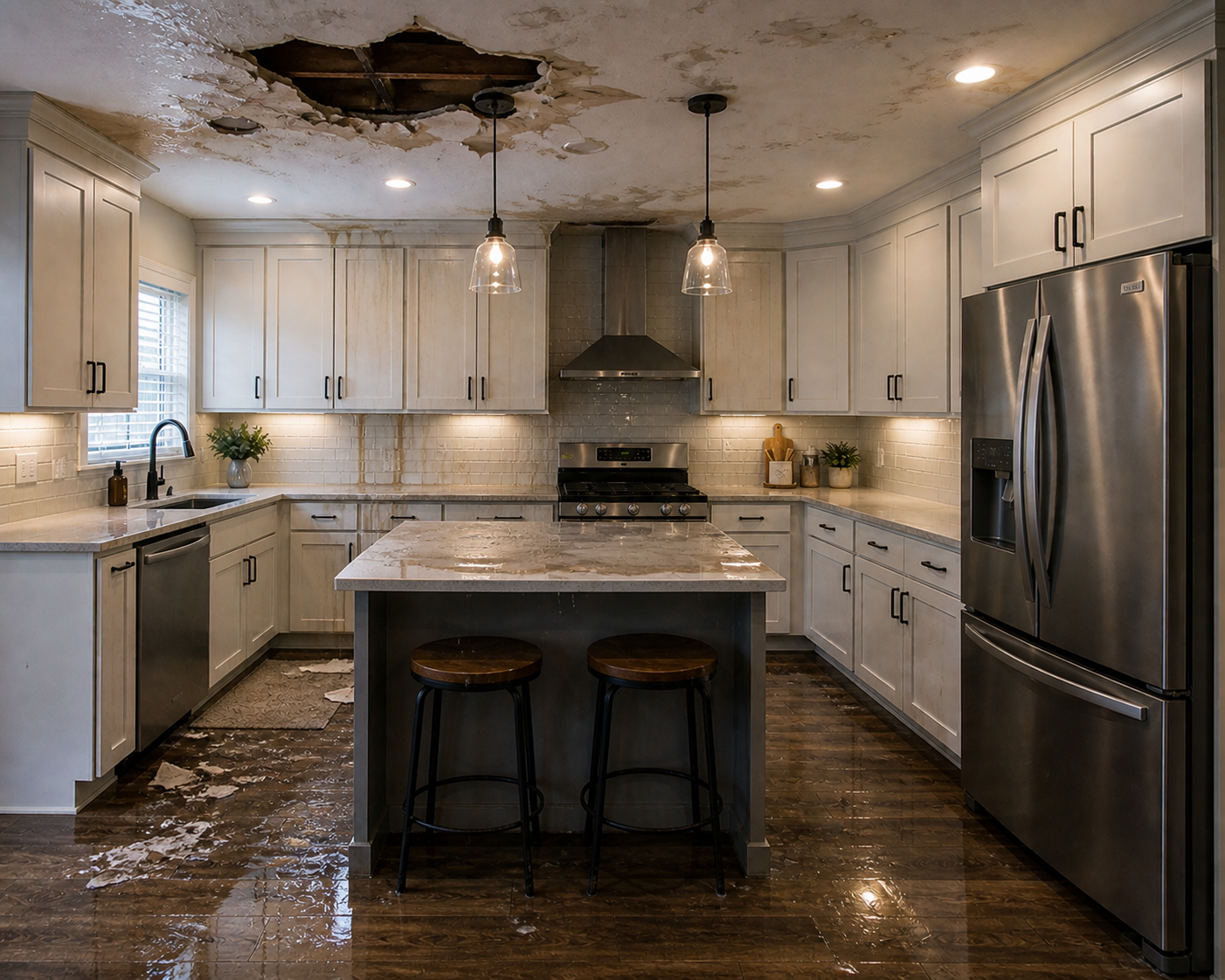
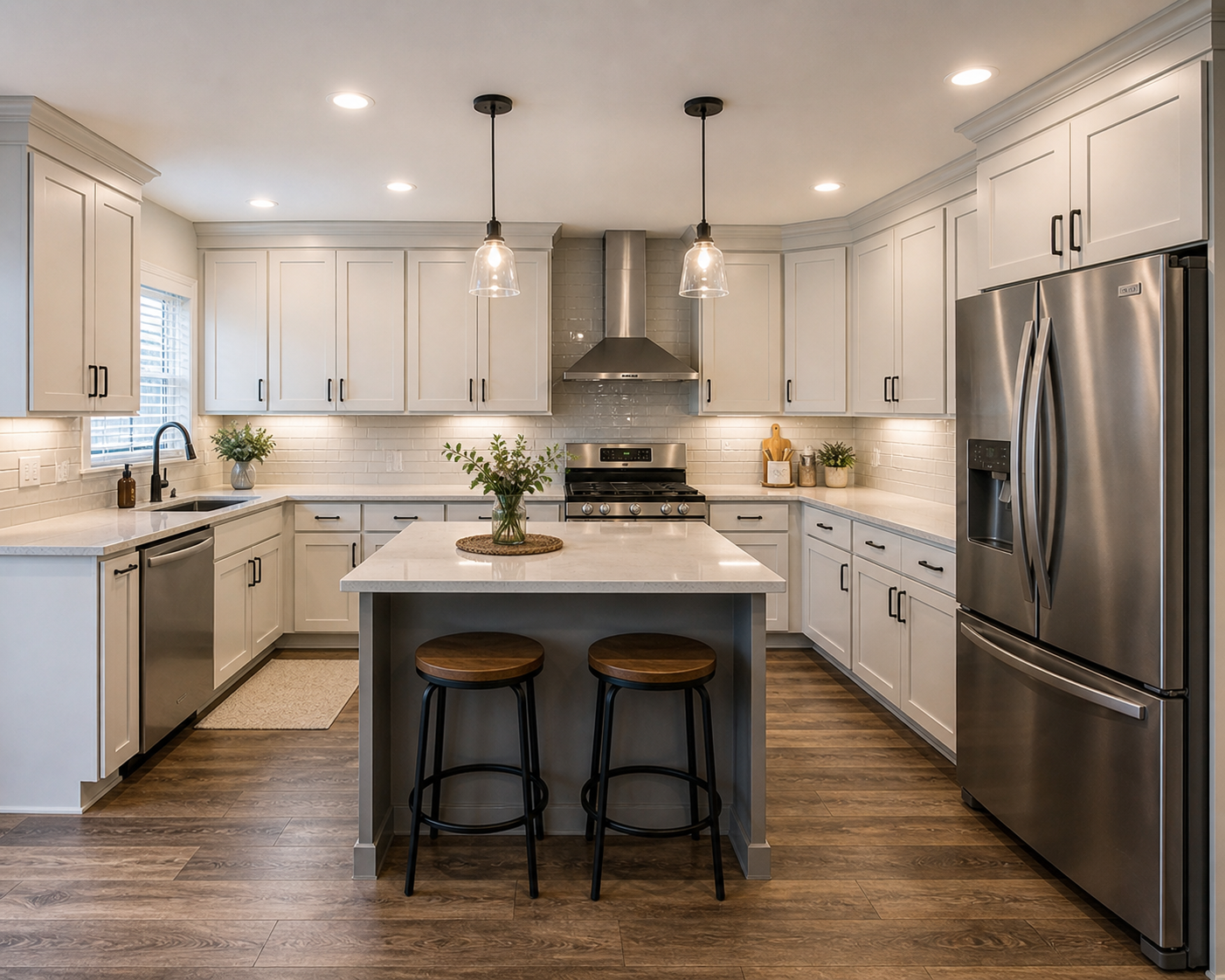
AI-generated – not an actual customer project. Shows what a result may look like.
Water damage doubles in cost every hour. Mold starts in 24. Call now — free inspection, fast response, insurance handled.