Maintain your sump pump
Test annually by pouring 5 gallons of water into the pit. Replace the pump every 7–10 years. Add battery backup ($500–$1,500) and consider a water alarm.
Basement floods range from a wet rug to total destruction. Here's how to identify the cause and respond correctly.
The first day determines whether this is a $5,000 problem or a $50,000 reconstruction. Follow these steps in order.
Standing water in a basement near electrical panels, outlets, or running appliances is electrocution risk. Cut power at the main breaker (from outside the basement if possible) before entering.
Sewer backup (Cat 3, sewage smell, comes from floor drains/toilets) needs different response than groundwater seepage (Cat 2, comes from walls/floor cracks) or burst pipe (Cat 1, comes from supply line). Cause determines insurance coverage and cleanup approach.
Burst supply line: shut off the main. Sump failure: replace or use auxiliary pump. Sewer backup: don't flush toilets or run water until cleared. Groundwater: install temporary barriers, but it'll keep coming until you address grading/drainage.
Especially keepsakes, electronics, important documents. Heavy furniture can be lifted onto blocks to keep legs out of water.
Photos and video of the water depth, source, and damaged items. Insurance pays for what's documented. Time-stamp matters.
More than 1–2 inches across more than a small area means professional submersible pumps. Wet-vacs and 5-gallon buckets are inefficient and dangerous.
Basement floods almost always involve subfloor and lower-wall drywall — both highly time-sensitive. Mold colonization in basement humidity often beats the 24-hour benchmark.
Power outage, motor failure, stuck float switch, or capacity exceedance. The #1 cause of basement floods nationally. Battery backup or water-powered backup pump prevents this.
Saturated soil pushes water through cracks in foundation walls and floor. Especially common in spring thaw, after major storms, or if drainage around the home is poor.
Hairline cracks in poured concrete or block foundations let water in slowly. Window wells without proper drainage become swimming pools that overflow into basement windows.
Tree roots, municipal sewer overload, septic failure pushing waste up through floor drains. Cat 3 contamination — different protocol than other basement floods.
Frozen or corroded pipes in basement utility area. Often goes unnoticed for hours until water level rises significantly.
Tank ruptures (typically 8–12 year lifespan) or T&P valve failure. 50+ gallons of hot water dumped into basement in minutes.
Soil sloping toward the foundation, downspouts discharging next to the house, no swales — all funnel water exactly where you don't want it.
Older US cities with combined sewers experience predictable basement backups during major storms.
These mistakes turn manageable losses into reconstruction projects. We see them every week.
Even if you've shut breakers, residual charge in capacitors can shock. Wait for the electrician or restoration tech.
Carbon monoxide poisoning. Submersible electric pumps only. Gas pumps must run outside with hose snaked into basement.
Lowering interior water below exterior water table too quickly can cause foundation walls to bow or even collapse. Pros pump in stages over 24–48 hours during severe events.
Dehumidifiers handle humidity, not standing water. Extraction first, then drying. Skipping extraction multiplies drying time and cost.
If it's been damp once, it'll be damp again. Use plastic bins for anything you must store in basements.
Cleaning up a flood without fixing the cause guarantees recurrence. Sump pump issues, drainage problems, foundation cracks all need permanent solutions.
If water depth exceeds 1 inch across more than a small area, if any porous materials (carpet, drywall, insulation) are wet, if sewage is involved, or if you're not sure of the cause — call a pro. Basement floods almost always require professional extraction (consumer wet-vacs handle a few gallons; basement floods are 100+ gallons), structural drying with commercial dehumidifiers (basement humidity makes drying slow), and often demolition of lower drywall and insulation. Insurance also expects professional mitigation.
Most water damage events are preventable with simple maintenance. Here's the playbook.
Test annually by pouring 5 gallons of water into the pit. Replace the pump every 7–10 years. Add battery backup ($500–$1,500) and consider a water alarm.
Extend downspouts at least 6 feet from foundation. Grade soil away from the house at minimum 6 inches drop in 10 feet. Consider French drains or interior weep tile in chronic-water basements ($3,000–$15,000).
Hairline cracks in poured concrete: hydraulic cement or epoxy injection ($300–$1,500). Block foundations: more involved, often needing exterior waterproofing membrane ($5,000–$20,000).
Mechanical valve in main sewer line prevents municipal backup. $1,200–$3,500 installed; required code in many flood-prone US cities.
Vinyl plank, sealed concrete, or epoxy floors handle minor water events without damage. Avoid carpet in below-grade basements.
Battery-powered alarms ($15–$50 each) sound when water reaches them. Place near sump, water heater, and floor drains.
Standard homeowners excludes basement flooding from sewer/sump events. The endorsement costs $50–$150/year and we strongly recommend it.
Failed septic = backup into basement floor drains. Pump every 3–5 years; camera inspect every 5–7.
| Item | Range |
|---|---|
| Emergency water extraction | $1,500 – $5,000 |
| Sump pump replacement | $500 – $1,500 |
| Drywall removal (lower 4 ft) & replacement | $2,000 – $6,000 |
| Insulation removal & replacement | $800 – $3,500 |
| Carpet & pad removal | $500 – $2,000 |
| Mold prevention/remediation | $1,500 – $8,000 |
| Structural drying | $2,500 – $6,000 |
| Reconstruction (paint, trim, flooring) | $3,000 – $15,000 |
Total basement flooding restoration in the US averages $5,000–$20,000, with severe events (whole-basement, sewage involvement, finished basements) reaching $40,000+. Insurance coverage depends entirely on cause: burst pipe is covered (HO-3), sewer backup needs endorsement, groundwater intrusion is excluded, and storm-driven flooding requires NFIP.
See full pricing breakdown across all servicesBasement flooding insurance is the most cause-dependent of all water damage claims. Burst pipes from supply lines or appliances: standard homeowners covers it. Sewer backup: needs water/sewer backup endorsement (most homeowners DON'T have this — check your policy). Groundwater seepage from rain or melting snow: NOT covered by standard homeowners; requires NFIP flood insurance. Sump pump failure: needs sump pump endorsement (separate from sewer backup endorsement in some policies). HVAC or appliance failure: covered. Foundation crack water intrusion: typically excluded as maintenance. Document the cause precisely with photos, plumber/contractor diagnosis, and rainfall data if applicable. Insurance claim review for basement floods requires more documentation than other water losses because of the multiple coverage paths.
How we handle your insurance claimSource containment, electrical safety, initial assessment
Submersible pumps remove standing water
Lower drywall, wet insulation, contaminated materials
Basement humidity makes drying slow — extra equipment days
Antimicrobial treatment or full remediation if mold present
Drywall, flooring, paint, possible foundation work
We document everything, bill insurance directly, and never charge for the inspection — even if you choose not to proceed.
Drag each slider to see what a completed restoration can look like. These are AI-generated illustrations, not photos of actual customer projects.
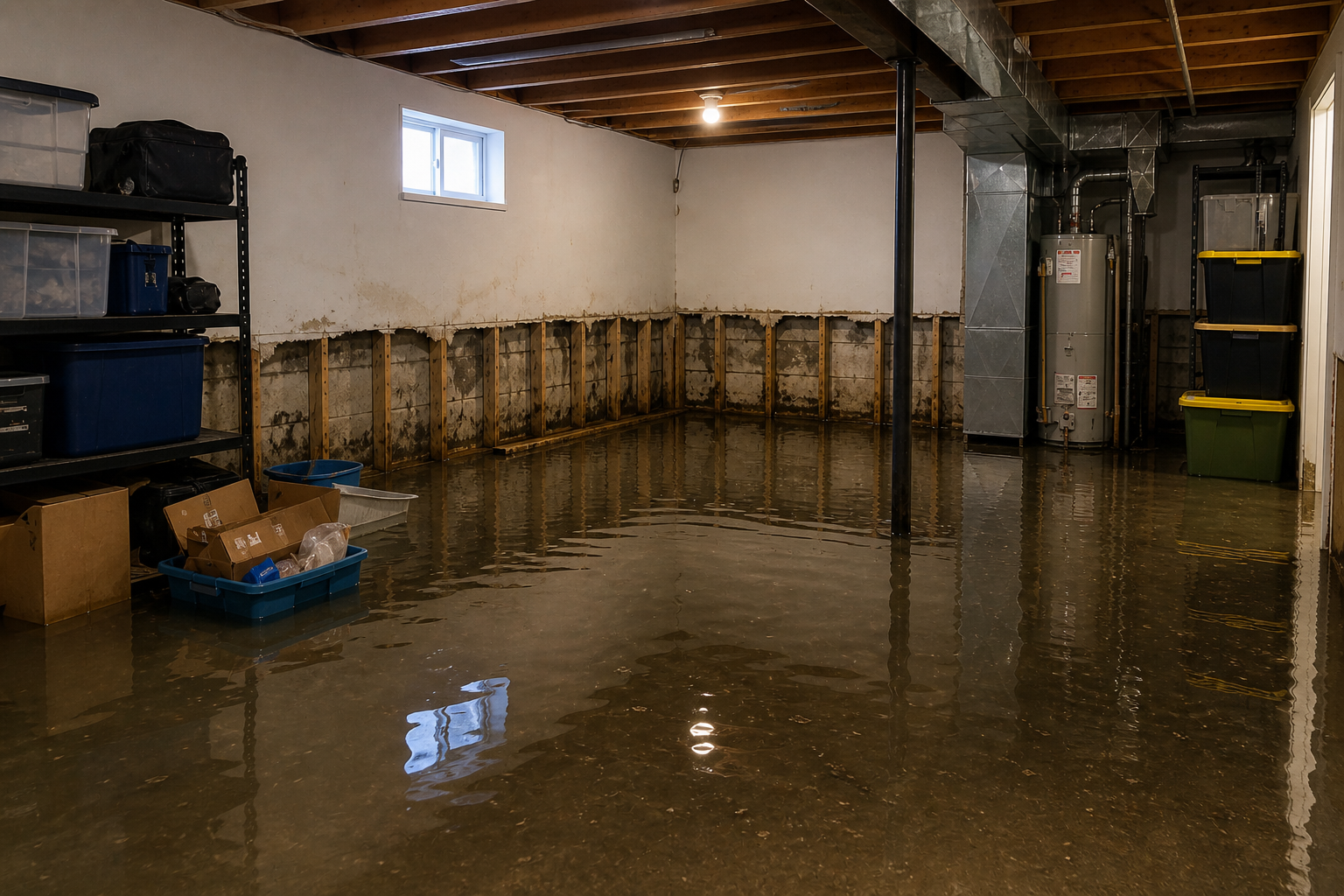
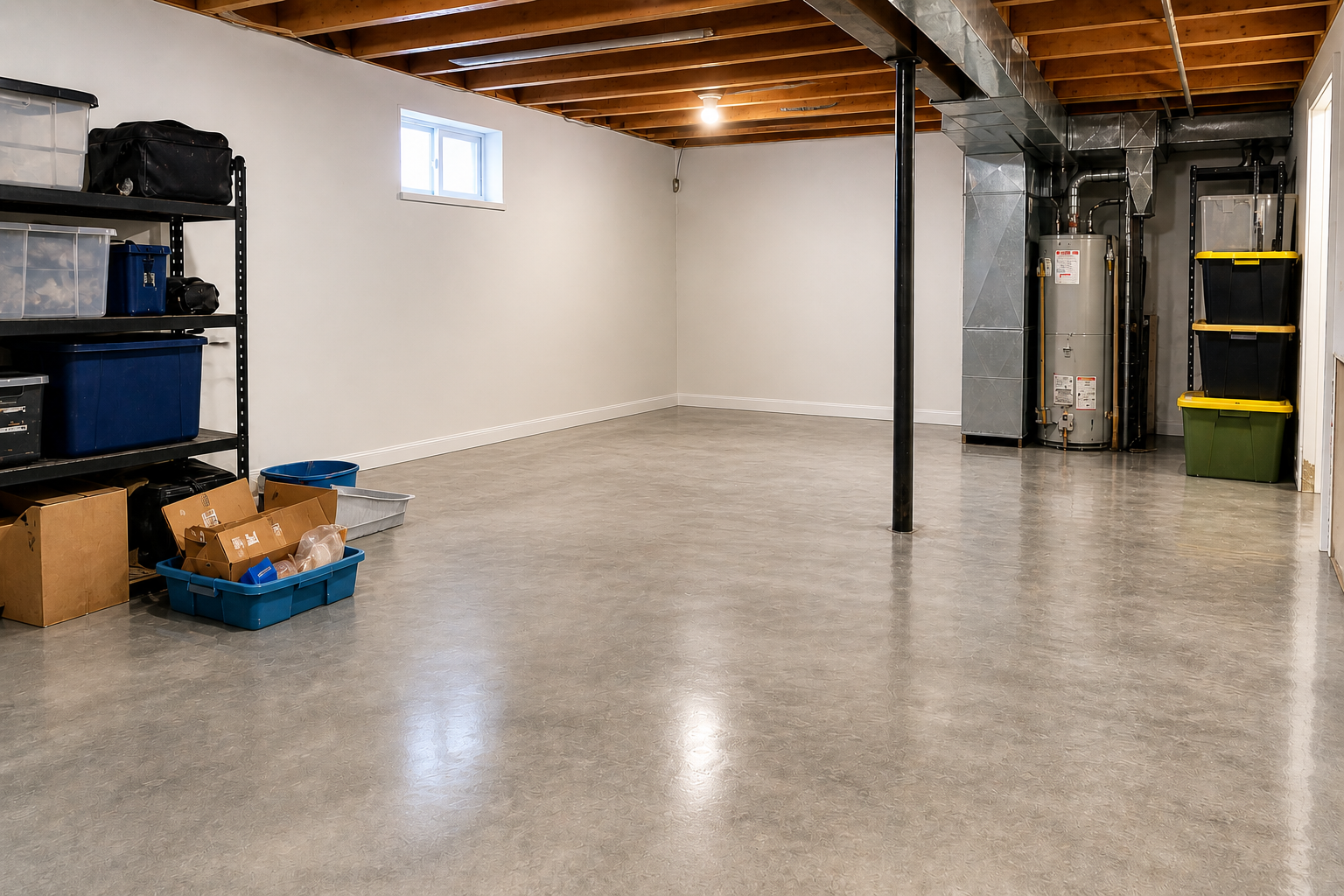
AI-generated – not an actual customer project. Shows what a result may look like.
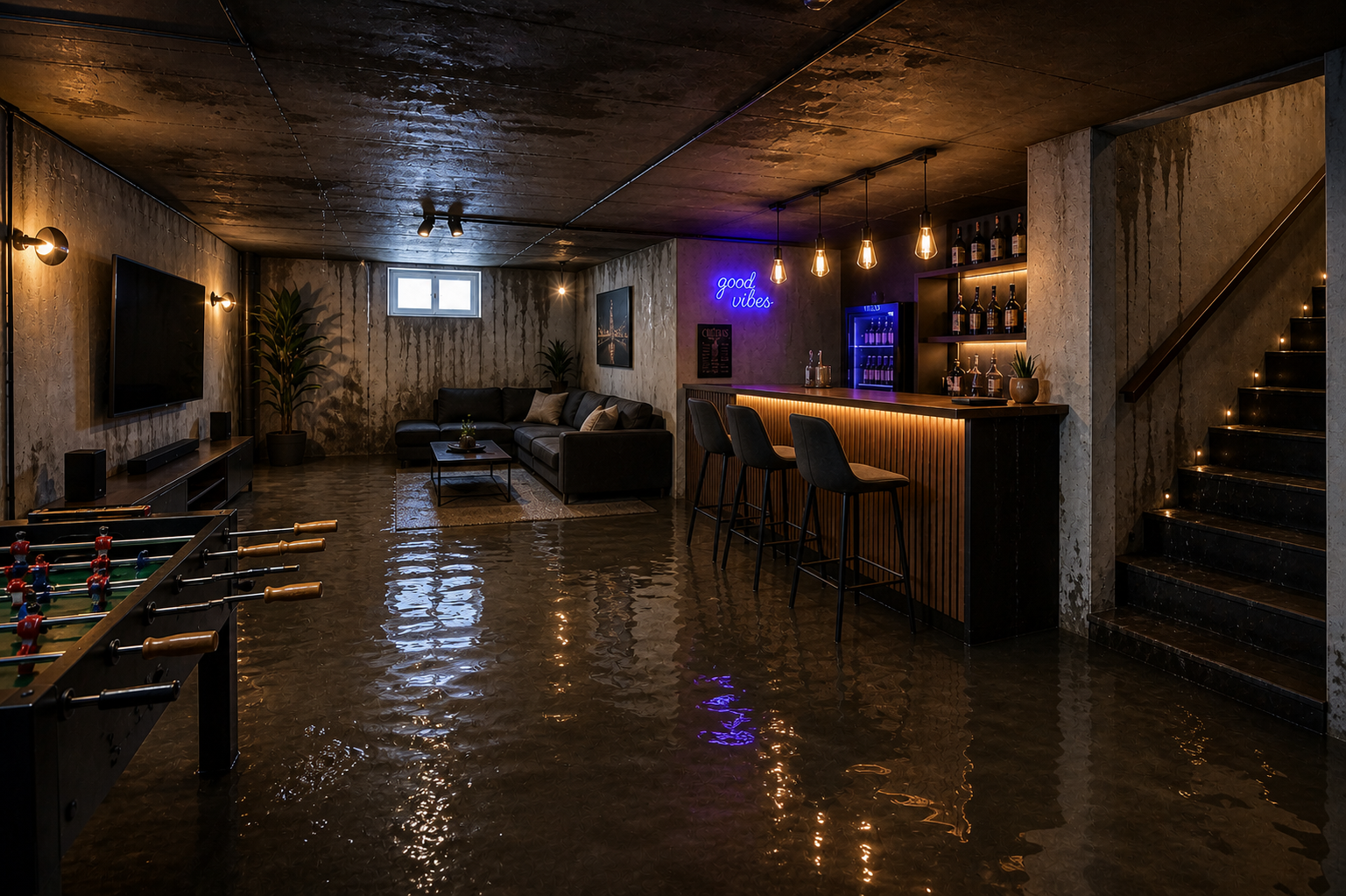

AI-generated – not an actual customer project. Shows what a result may look like.
Water damage doubles in cost every hour. Mold starts in 24. Call now — free inspection, fast response, insurance handled.