Submersible trash pumps
Handles sewage with solids — consumer pumps clog and spread contamination
Category 3 black water — done by the IICRC S500 book. Full PPE, EPA disinfectants, biohazard disposal.
Sewage cleanup — also called Category 3 (Cat 3) or black water restoration — is the highest-contamination class of water damage and the only one that should never, under any circumstance, be handled DIY. Cat 3 water carries pathogens including E. coli, Salmonella, Hepatitis A, norovirus, parasites, and chemical contaminants. The IICRC S500 standard requires full PPE, dedicated equipment, EPA-registered hospital-grade disinfectants, and proper disposal of porous materials that contacted the contamination. Anything less leaves bacteria and biofilm in your home — invisible but actively dangerous for months.
Restoration work generally follows the same sequence, based on IICRC industry standards.
Crews arrive in Tyvek suits, P100 respirators, gloves, and rubber boots. We secure the area, ventilate, and prevent cross-contamination into clean parts of the home.
Identify and stop the source — sewer line clearance, toilet repair, sump pump replacement. Without source control, every gallon you remove is replaced.
Submersible trash pumps and dedicated Cat 3 truck-mount lines (never reused on Cat 1 jobs) remove sewage. Solids are separated and disposed as biohazard waste.
Drywall, carpet, pad, insulation, MDF cabinets, particleboard — anything porous that contacted sewage — is cut out, double-bagged, and disposed per state hazardous waste rules.
All remaining hard surfaces are pre-cleaned with detergent (cleaning before disinfection — disinfectants don't penetrate dirt) then disinfected with EPA-registered hospital-grade products.
Sub-surface antimicrobials applied to studs and substrate. Encapsulants seal residual contamination on materials being kept.
Standard structural drying follows. Final ATP testing or surface culture verifies disinfection success before we sign off.
What separates restoration from DIY isn't effort — it's equipment. Here's what we bring on every sewage cleanup job.
Handles sewage with solids — consumer pumps clog and spread contamination
Never cross-used on clean-water jobs to prevent contamination transfer
Vital Oxide, Benefect Decon 30, Sporicidin — kill pathogens at validated levels
OSHA-compliant biohazard worker protection
Containment of aerosolized bacteria during demolition
Validates surface disinfection before final sign-off
Compliant disposal per state hazardous waste rules
Final residual moisture removal in hard-to-reach areas
Sewage cleanup is significantly more expensive than clean-water work because of PPE, dedicated equipment, mandatory material disposal, and biohazard waste fees. A single bathroom toilet overflow with limited spread runs $3,500–$7,500. A basement-wide sewer backup typically runs $7,000–$18,000. Whole-home contamination from a main sewer line collapse can exceed $30,000 with full reconstruction. Insurance with water/sewer backup endorsement typically covers up to its sublimit ($5,000–$25,000 depending on your policy).
See full pricing breakdownStandard homeowners insurance does NOT cover sewer backup unless you have a specific water/sewer backup endorsement — usually $50–$150/year added to your policy. Most US homeowners are underinsured here. If you have the endorsement, coverage is typically capped at $5,000–$25,000. Flood insurance (NFIP) covers some sewer backup if it's caused by flooding. We document cause and pursue every available coverage angle including municipal liability claims when applicable (city sewer line backed up into your home).
How we handle your insurance claimMost secondary water damage is preventable. Here are the mistakes we see most often — and what they cost.
Beyond the obvious health risk, DIY sewage cleanup almost always misses the contamination that wicked into walls, behind cabinets, and under flooring — leaving an active pathogen reservoir in your home. Even experienced contractors miss this without proper training.
Consumer disinfectants aren't EPA-registered for the pathogens in raw sewage. Bleach also reacts dangerously with ammonia in urine. Pros use hospital-grade dual-action products designed for biohazard remediation.
Drywall, carpet, pad, and insulation that contacted sewage MUST come out per IICRC S500. Drying contaminated porous material just creates a dried-out biohazard. No exceptions.
If sewage water reached HVAC ducts, the entire system needs decontamination before use — otherwise spores and bacteria spread house-wide every time the system runs.
If municipal sewer backup caused the loss, the city may be liable. Most homeowners don't pursue this — but with proper documentation, recovery is often possible.
Pathogens in sewage water multiply rapidly at room temperature, and bacterial colonies establish in porous materials within hours. Beyond the health risk to occupants, the longer Cat 3 water sits, the more material has to be removed — turning a $5,000 contained job into a $20,000 reconstruction. There is no scenario where waiting helps.
Free, no-obligation inspection. We document everything, bill insurance directly, and never charge for the assessment — even if you choose not to proceed.
Drag each slider to see what a completed restoration can look like. These are AI-generated illustrations, not photos of actual customer projects.
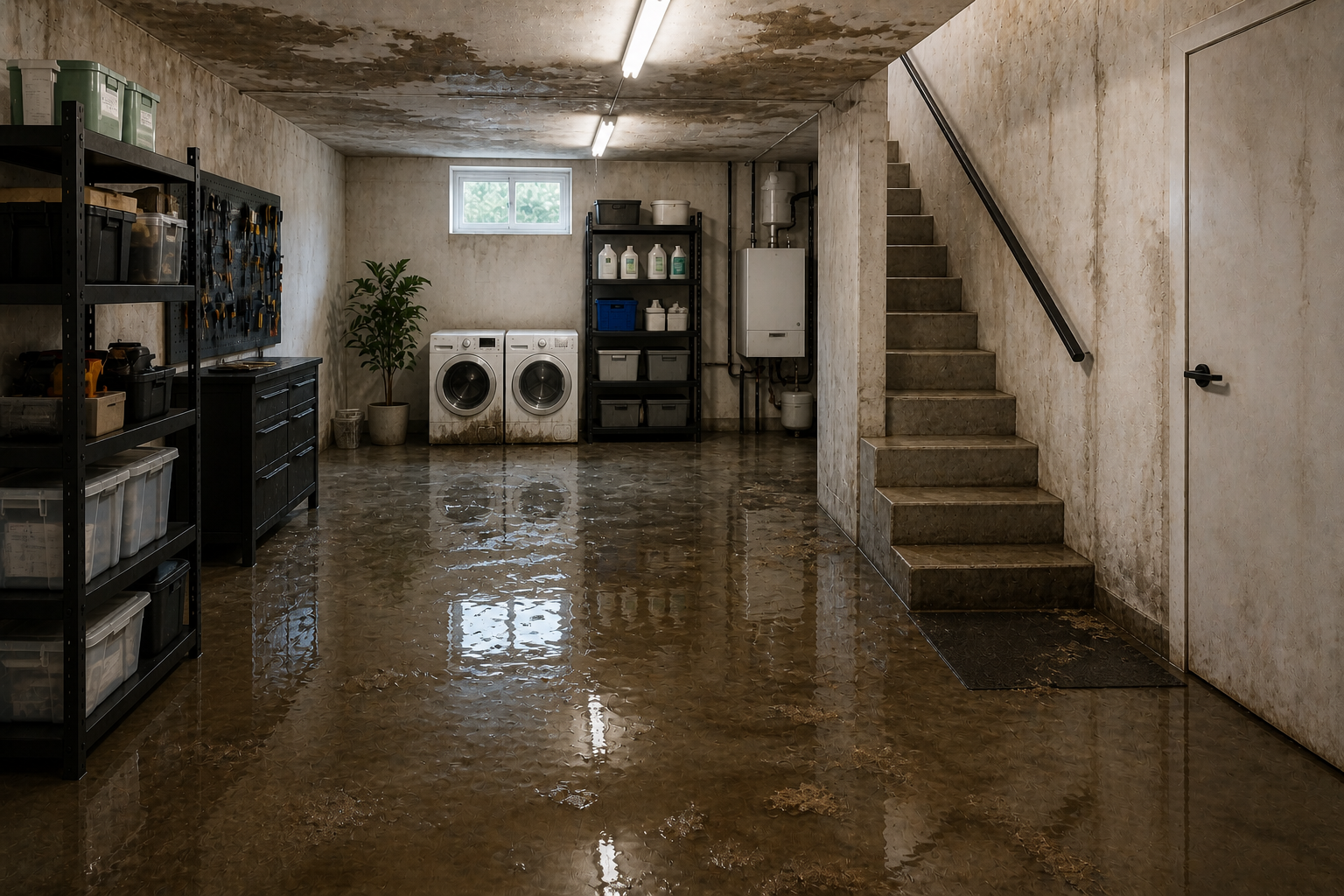
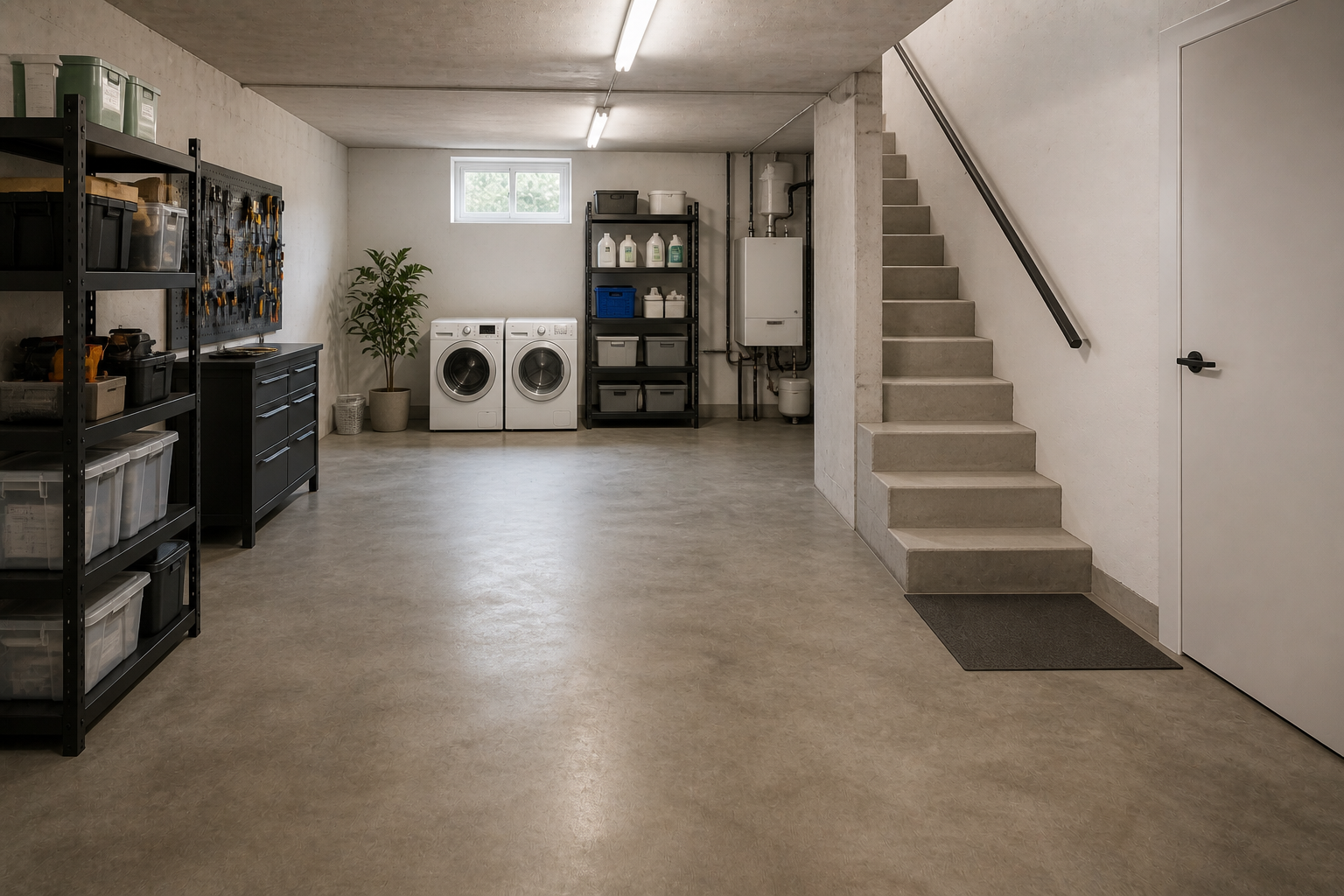
AI-generated – not an actual customer project. Shows what a result may look like.
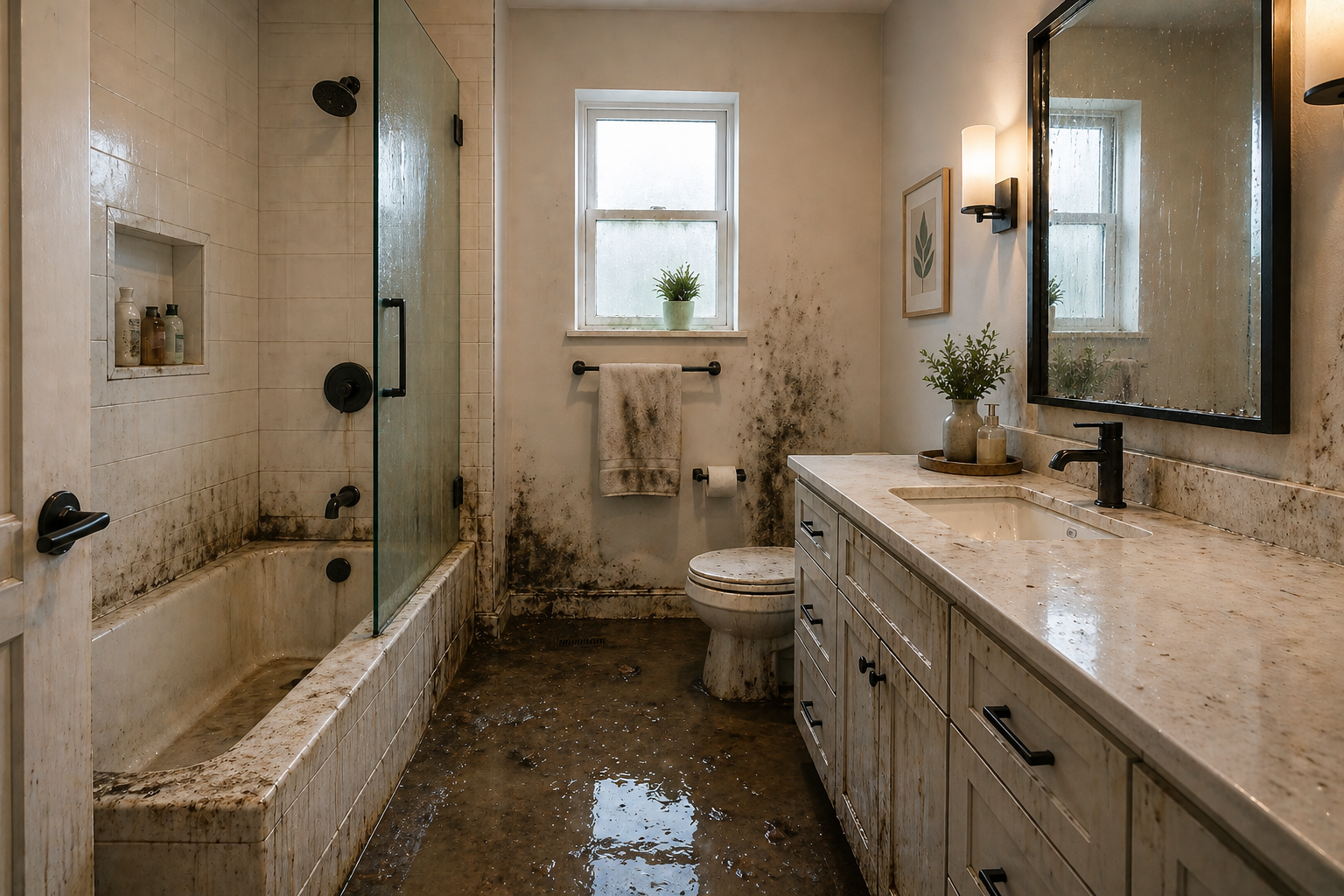
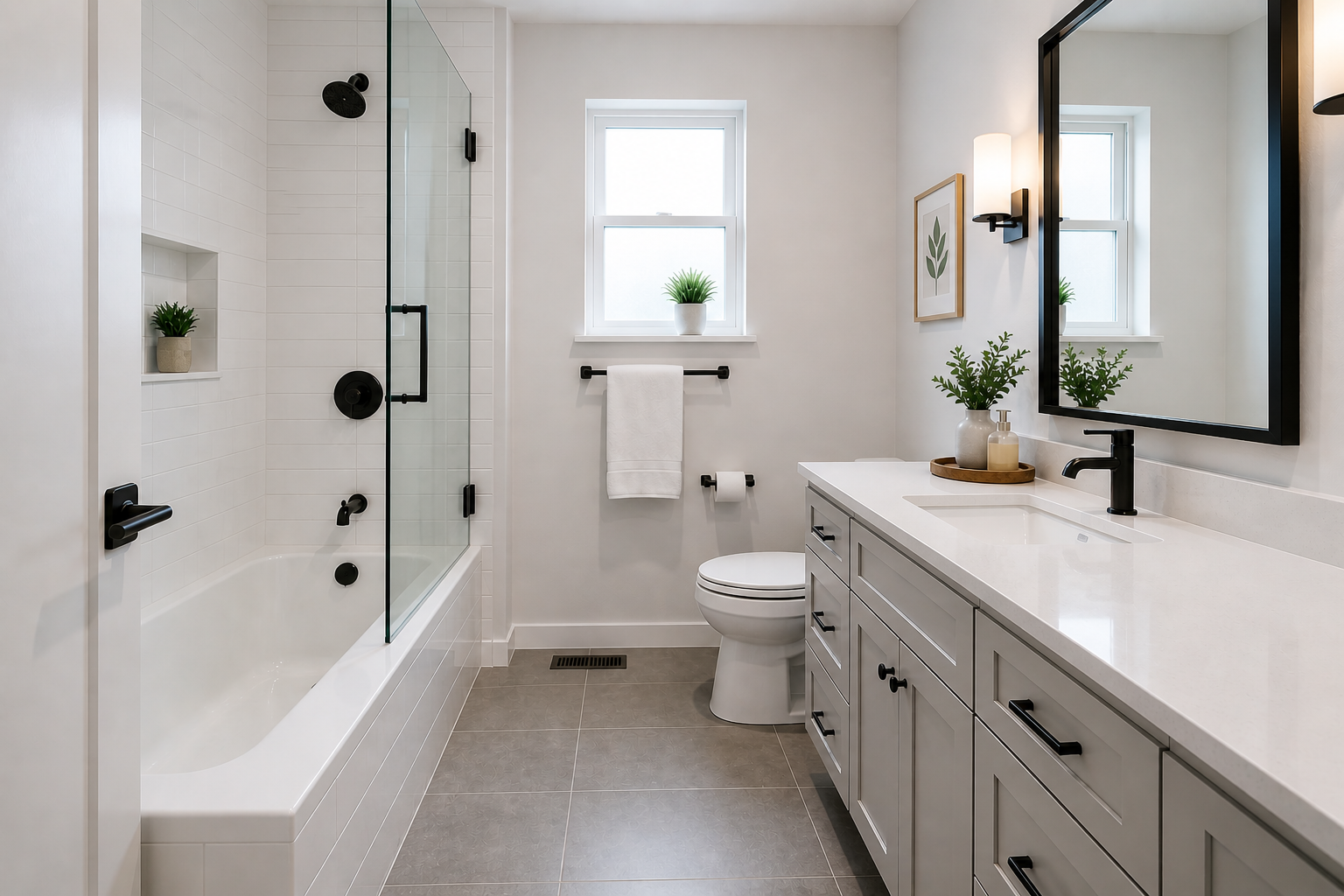
AI-generated – not an actual customer project. Shows what a result may look like.
Water damage doubles in cost every hour. Mold starts in 24. Call now — free inspection, fast response, insurance handled.